
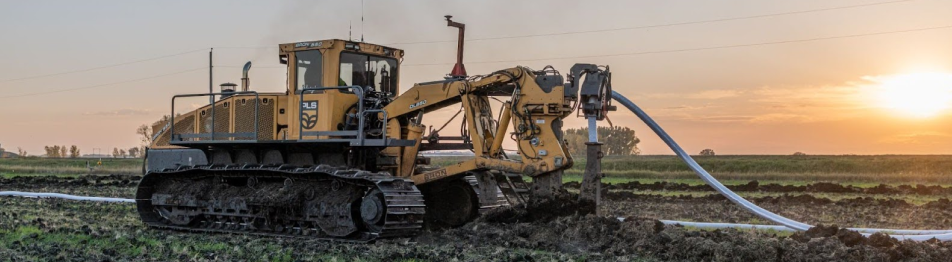
Tile drainage might feel like a modern agricultural tool, but its roots stretch all the way back to ancient Rome. As early as 200 BC, farmers hand-dug trenches and laid clay tiles to prevent waterlogged fields and support healthier crops. The idea was simple: remove excess water, improve soil conditions, and unlock the land’s full potential.
By the 17th and 18th centuries, European nations like the Netherlands and England refined these early methods to reclaim massive tracts of land for food production. The practice eventually made its way to North America in the mid-1800s, where mechanization and industrial production quickly transformed the industry. Steam engines, trenchers, and finally plastic tubing revolutionized drainage and made installations faster, more durable, and more precise.
What hasn’t changed? The core principle. Tile drainage has always been about managing water wisely, improving soil health, and creating more resilient farmland - values that still guide today’s systems.


